When we talk about disability support, the conversation often focuses on the practical — personal care, transport, daily tasks. These things matter enormously. But there is another need that is just as important, and far less often discussed: the need to belong.
Social isolation is one of the most significant challenges facing people living with disability in Australia. Research consistently shows that loneliness and disconnection have serious impacts on mental and physical health — comparable, in some studies, to the health effects of smoking. And yet, for many NDIS participants, social connection is still treated as a secondary consideration rather than a core support need.
It does not have to be that way.
Why isolation happens
People living with disability can face a range of barriers to social connection that others may not encounter. These can include:
- Physical barriers — difficulty accessing transport, venues, or public spaces
- Communication differences — finding social situations harder to navigate
- Reduced opportunities — fewer natural environments for building friendships, such as workplaces or community groups
- Mental health impacts — anxiety, low confidence, or depression that makes reaching out feel difficult
- Loss of previous social networks — particularly following an injury, diagnosis, or change in living arrangements
Understanding why isolation happens is the first step to addressing it meaningfully — not just with a program or activity, but with genuine, person-centred support.
What the research tells us
Studies from organisations including the NDIS Quality and Safeguards Commission and Disability Advocacy Network Australia consistently highlight social isolation as a major quality-of-life issue for people living with disability. Key findings include:
- People with disability are significantly more likely to report feeling lonely than the general population
- Social participation is strongly linked to improvements in mental health, self-esteem, and sense of purpose
- Supported community participation can lead to better health outcomes, reduced reliance on crisis services, and greater long-term independence
In short: connection is not a luxury. It is a health outcome.
How the NDIS funds social connection
The good news is that the NDIS recognises social participation as a legitimate and fundable support need. Under the NDIS, community participation support can be funded through several budget categories including:
Assistance with Social, Economic and Community Participation — covering support to attend activities, join groups, and participate in community life with the help of a support worker.
Capacity Building — Social and Community Participation — covering skill development to help participants build confidence, make connections, and eventually engage more independently.
This funding can be used flexibly — for attending a local club, joining a community group, volunteering, going to events, or simply spending time in places that matter to the participant.
What community participation support looks like in practice
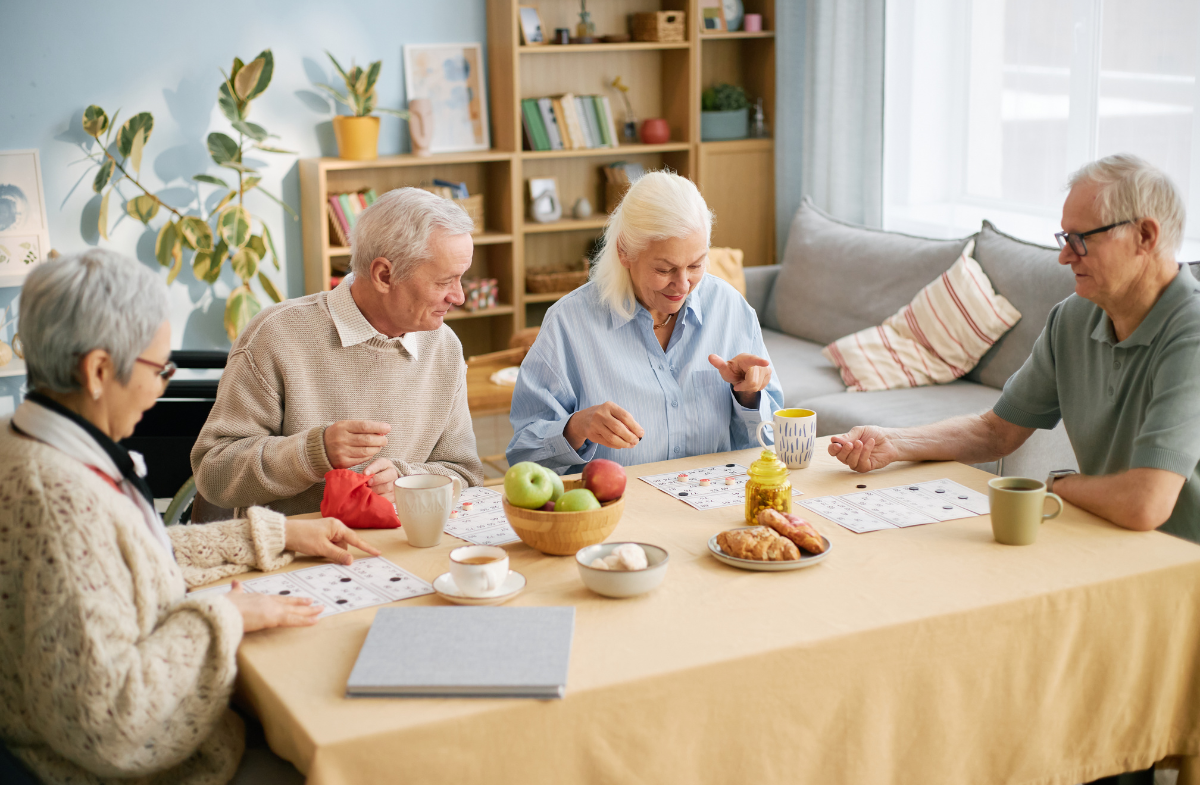
At Surf Coast Support Services, community participation support is shaped around the individual — not a fixed program. For one person it might mean weekly support to attend a local art class. For another, it might mean having a support worker accompany them to a sporting event, a community garden, or a faith community they love.
Some of the activities we support our participants to enjoy include:
- Social groups and peer connection programs
- Recreational activities — sport, music, art, and craft
- Volunteering and community service
- Attending events and day trips around Geelong and the Surf Coast
- Developing friendships and maintaining existing relationships
- Learning to use public transport and access the community independently
Building confidence, not just activity
The goal of good community participation support is not just attendance — it is growth. We work with participants to gradually build the skills and confidence to engage more independently over time. For some participants, that means working toward catching a tram alone, joining a group without a support worker, or eventually starting their own social connections through volunteering or study.
This is what the NDIS calls capacity building — and it is one of the most meaningful things good support can achieve.
Social connection and mental health
The relationship between social connection and mental health is bidirectional. Loneliness worsens anxiety and depression. But meaningful connection — feeling seen, valued, and part of something — can be genuinely therapeutic. For participants who are also living with psychosocial disability, supported community participation is often as important as any clinical intervention.
We take this seriously. Our support workers are trained to build genuine rapport, not just accompany participants from A to B. The relationship itself is part of the support.
How to include social participation in your NDIS plan
If social connection is not currently reflected in your NDIS plan, it is worth raising at your next plan review. When preparing, be specific about:
- What activities you would like to participate in and why they matter to you
- What barriers currently prevent you from doing so
- How support would help you build skills and confidence over time
- Any mental health or wellbeing goals that connection would support
Your support coordinator or Local Area Coordinator can also help you make the case to the NDIA that community participation support is reasonable and necessary for your situation.
We are here to help
At Surf Coast Support Services, we run social connection programs and provide one-on-one community participation support across Geelong, the Surf Coast, and the Bellarine Peninsula. Whether you are looking for structured group activities or flexible individual support, we would love to talk about what is possible.
Call us or email info@surfcoastsupport.com.au — the first conversation is always free.